
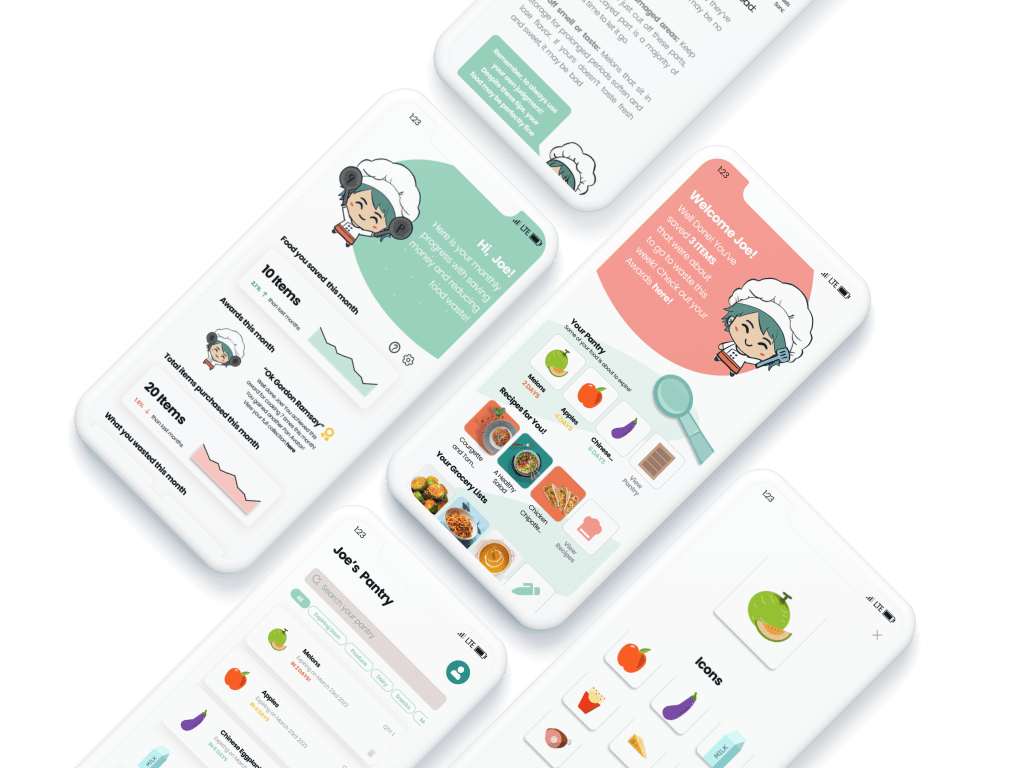
Pandora
Role: Project Manager & Designer
Duration: Jan 2023 to Apr 2023
Skills: UX Research, UI/UX Design, and PM
Background
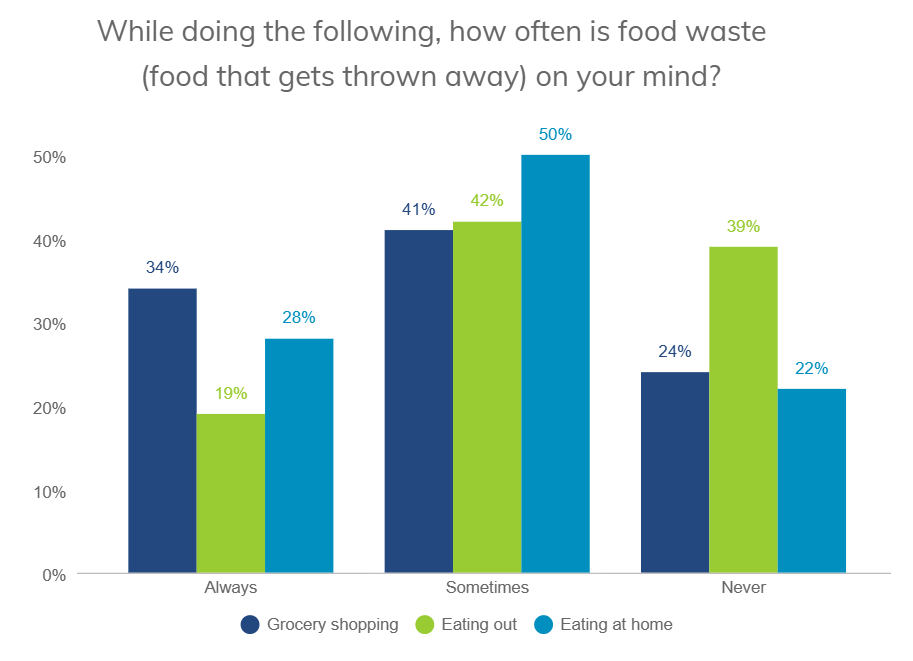
In a study done by the University of Illinois, it was found that “young adults have a higher tendency to waste food compared to other age groups”. Some reasons stated were environmental constraints, a lack of transportation, apathy towards food waste, but most importantly, a lack of knowledge and inability to adapt to living on their own. When a student goes from eating “all their meals in an all-you-can-eat dining hall” it’s hard to learn “how to plan and grocery shop for meals” (University of Illinois College of Agricultural, Consumer and Environmental Sciences, 2018). In response to this problem, our team created Pandora, an application that would ultimately help young adults build a lifestyle that encourages them to cook at home while generating little to no food waste, helping reduce food waste in the long run.
User Personas
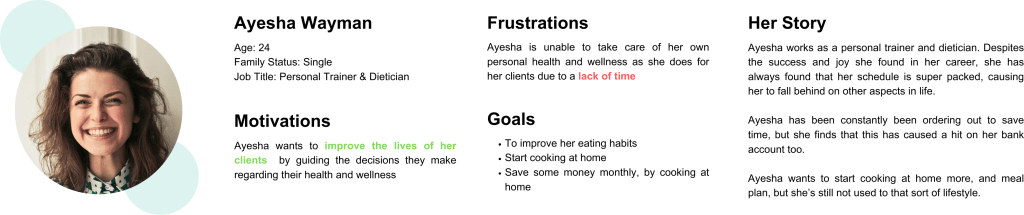
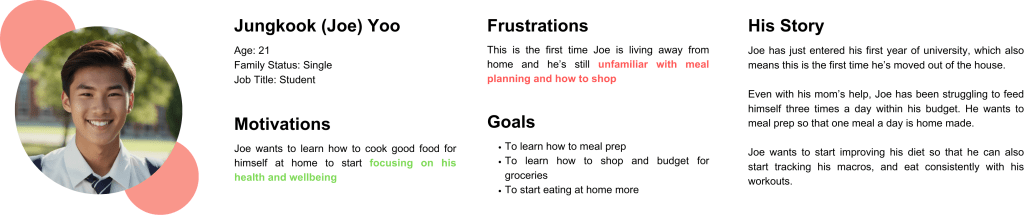
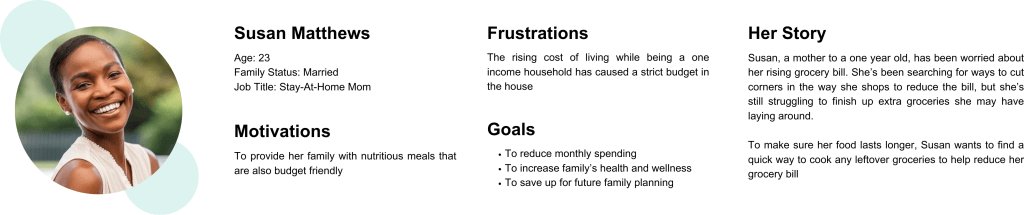
Through our research, we then began to delve into our user personas. In what situations could someone use our app? How can it help them in their day to day lifestyle? Using our current research, what are some realistic scenarios in which our app will be used?
Wireframes & Low Fidelity
After determining the major user tasks for Pandora, we then went ahead and developed some wireframes to get a rough idea for user flows. The wireframes gave our design team a rough idea of what the app’s layout would look like. We then assigned each member a feature of Pandora to design, and met a week later. After reviewing each other’s designs, we would discuss within the team what improvements can be made and split off to improve that iteration. We maintained this process for around a month, until we needed our Prototype to be tested by users.

User Testing & Improvements
Once we completed our prototypes, we took it to 10 different university students to conduct a test focused on the usability of the design. Each member of the team was asked to find two students to conduct a prototype walkthrough on, and once these tests were complete, we came back together as a team and discussed our findings. We then identified some common issues pointed out by our users and split them up into the following levels: Level 5 (Catastrophe), Level 4 (Severe), Level 3 (Critical), Level 2 (Moderate), and Level 1 (Minor). Here were some of the key usability issues we found:
Confusing Navigation Icons
Nearly half our participants struggled to identify which icon was meant for the pantry page and the recipe page. This confusion increased friction in the user journey and complicated the UX.
The main issue had to do with the pantry icon in the old navigation bar, which also happened to look like a sheet of paper with words written on it – making a user think it was a recipe button as well.
Old Navigation Bar

New Navigation Bar

Poor Onboarding
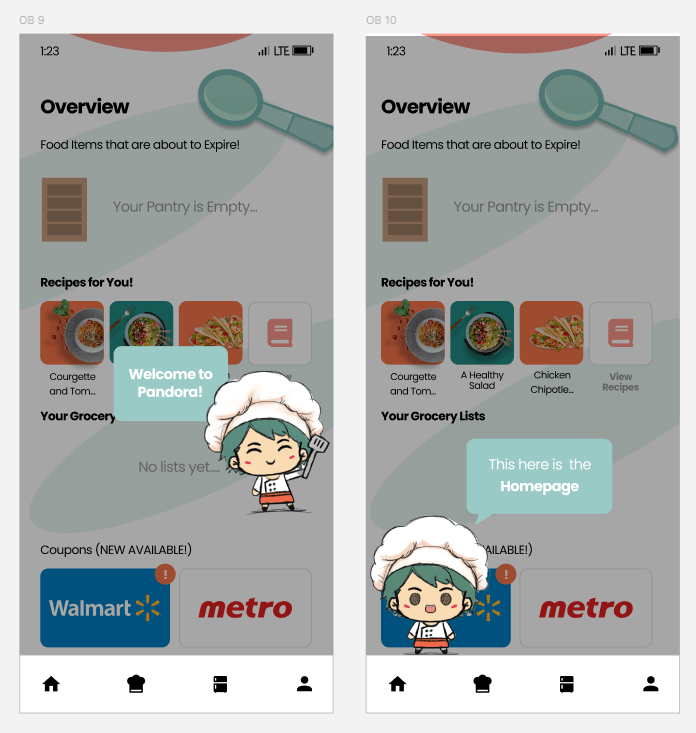
After going through the onboarding process, we found that some users were overwhelmed by the amount of information provided at once.
We decided to then let users explore the app on their own, and have our onboarding buddy pop up throughout a user’s exploration. This prevented an info overload that a user would face.
High Fidelity Prototype
With our new findings in hand, we went on to develop our final prototype. We implemented some of the changes that our participants discussed during usability tests, and even re-evaluated the main uses of Pandora. With a more realistic outlook on Pandora and how its users may interact with the app, we went on to complete the final version. You can view the full prototype here!

Key Learnings & Takeaways

Leadership & Communication: This project was one of the first times I tried to take on more of a leadership role. Based on my learnings from previous projects, I was able to recognize how important communication was between team members. It was important that each team member was comfortable to discuss their opinions and had enough freedom to incorporate work that they were proud of. I truly felt like each member of this team was able to utilize the skills they had and show it off in Pandora. I tried to approach my “leader” role is a more relaxed manner and I think this contributed to a project that each person resonated with. I still believe I could have done a better job at discussing things with individual team members or getting teammates to speak up more, but for the most part, our team’s communication was amazing, and I believe this helped Pandora really come together.
Iterate, Iterate, & Iterate: Our constant communication also let us create several iterations and designs of Pandora. I think this really helped our team identify the purpose of Pandora. Creating several iterations put the entire time on the same page, and we were able to come together to come up with more features to help university students build waste free habits.

Find something cool?
Keep in touch with the links below!
 Ashmita Ravichandran