
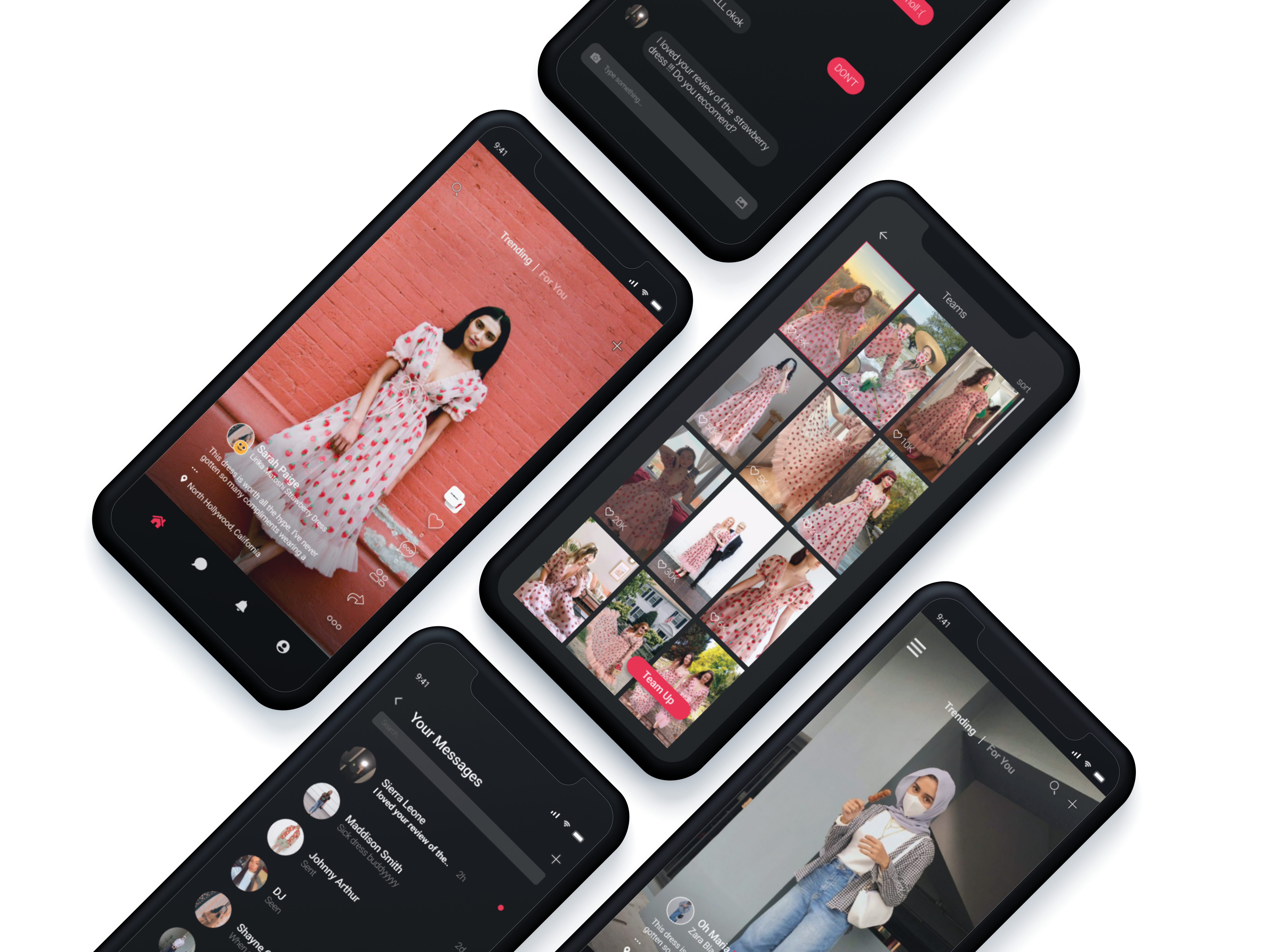
MyBranz
Role: Founding UI/UX Designer
Duration: Apr 2022 to Aug 2022
Skills: UI/UX Design & Illustration
Background
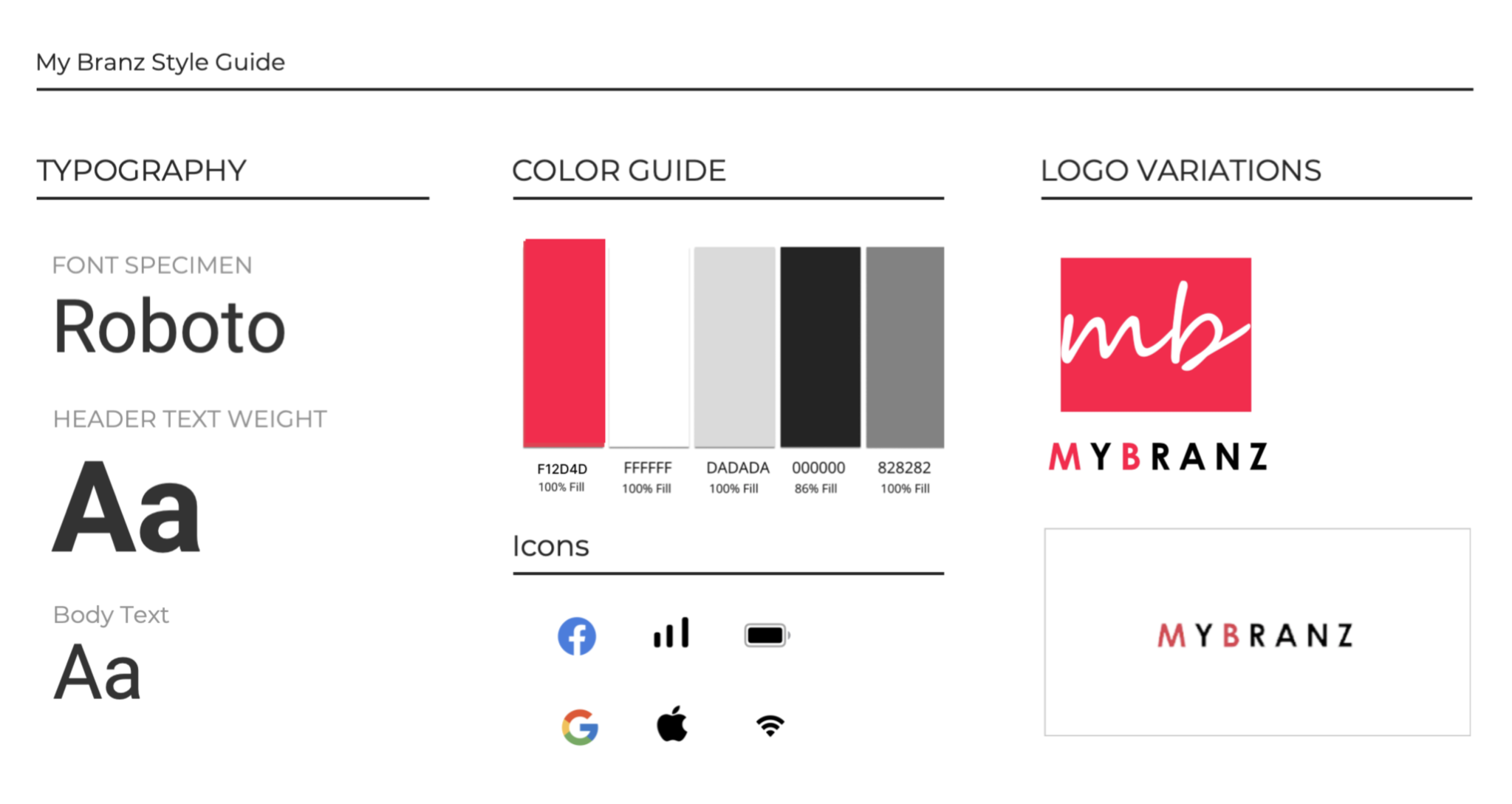
Before I was even brought in, the company had already created a list of things that needed to be designed for the app, so I mostly focused on the UI aspect of the app. Every two weeks, our project manager would assign me a task or feature to prototype, but before jumping in, I first familiarized myself with the company’s style guide.
Some of these screens I was responsible for creating as a UI/UX designer were: the navigation bar, the homepage (as well as the flows corresponding to it – ie. liking, commenting, sharing, teams feature, and brands feature), and the messaging feature. Most of my time was spent on the homepage, as that was the place users would spend the most time.
Competitor Analysis
For the home screen, our project manager had a list of features I had to include, with some being: the ability to like, comment, and share. However, there were two features that would be unique to the MyBranz app: the teams feature, brands feature, and experience metric feature. Another thing that they mentioned was they wanted a user’s post to take up the entire screen, so I began to research other apps that had a similar layout to what they had in mind.
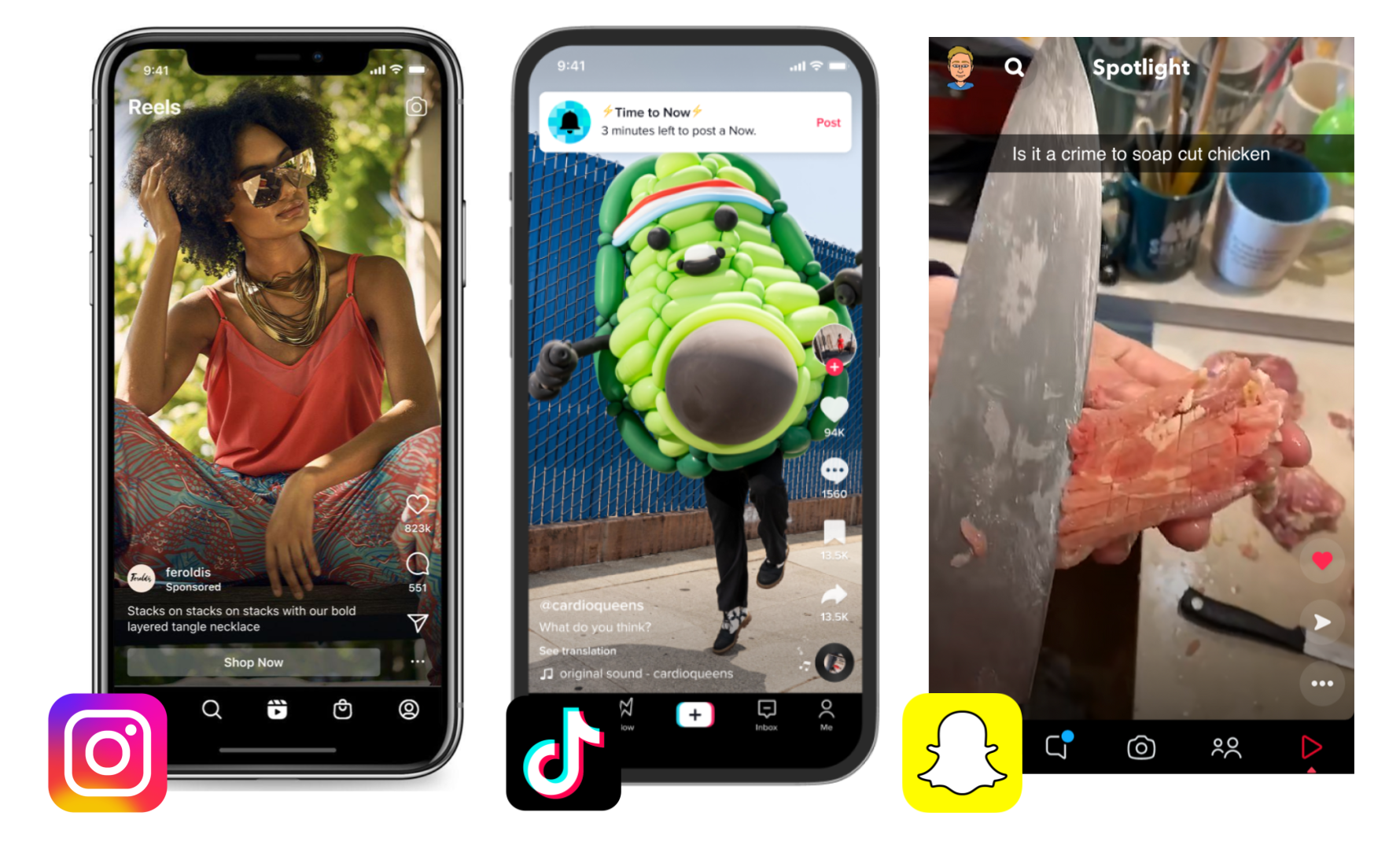
Based on the trends I found from other social media apps, I created a basic layout for the homepage of MyBranz. I wanted to maintain the some sort of familiarity for people who are new to the app so I placed liking, commenting, sharing, etc in a navigation bar on the side, with a fixed navigation bar on the bottom for other features. I also did this because MyBranz had a few features that may be foreign to users, so I wanted a new user’s interaction to be a bit more intuitive and less overwhelming.
Unique Features
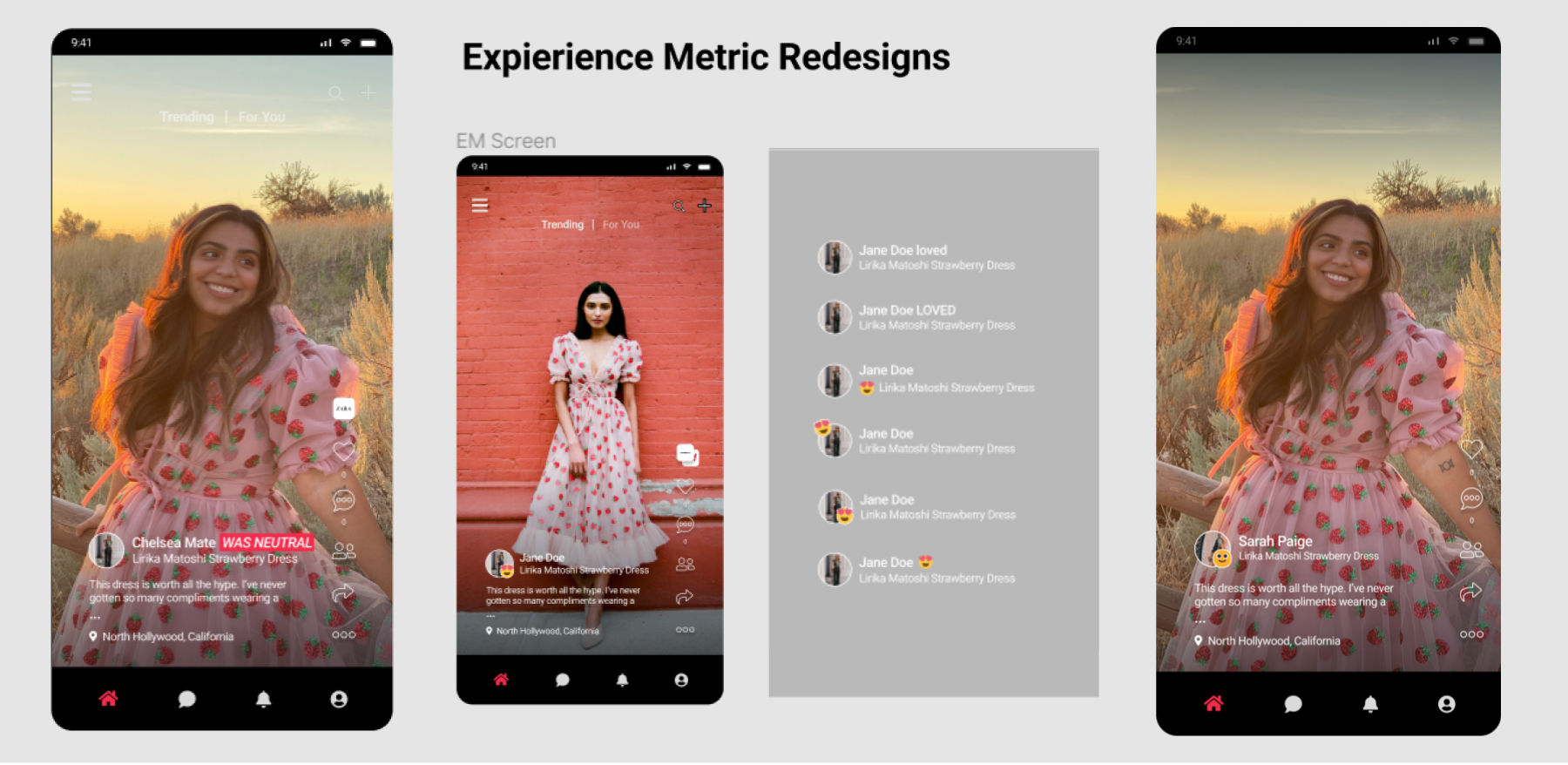
As I mentioned before, some features that I would have to develop from scratch was the teams features, brands feature, and review feature. For this process, I was communicating with my project manager, and fellow designer to figure out the goals of each feature. After understanding the process of each feature, I continued to research other apps and began to create rough user flows. I was able to create medium fidelity prototypes for the following features, as seen below.
Experience Metric : the goal of this feature was to show the user’s feelings towards the app in a quick manner – instead of reading the entire review, user’s could just look at the emotion tied to the product to get a quick review.
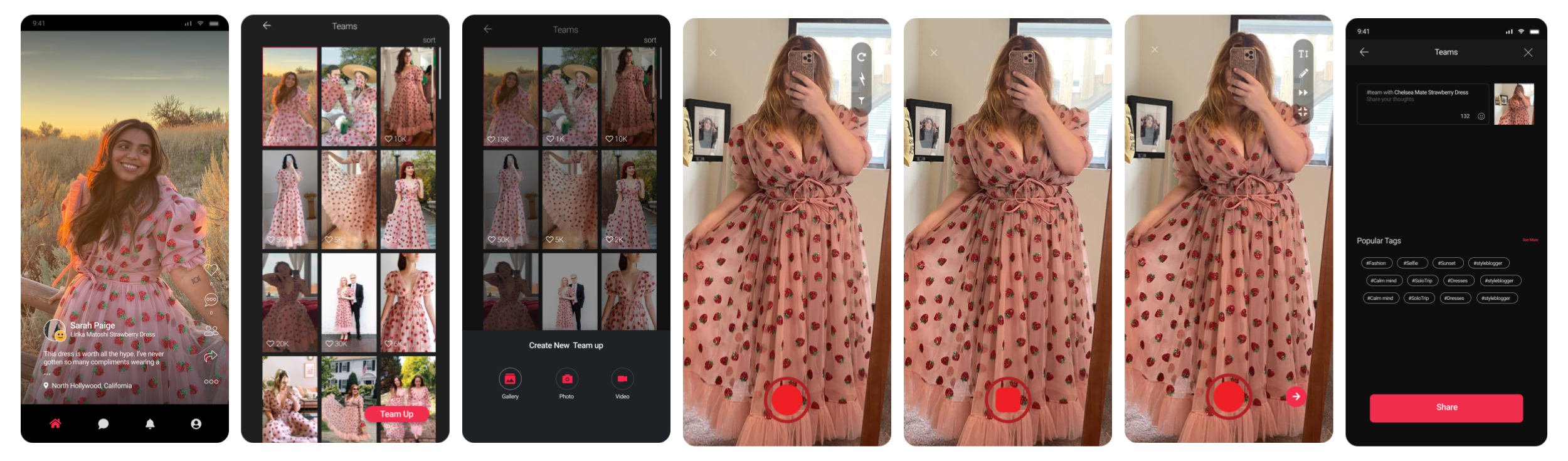
Teams: the goal of this feature is to allow users to reply back to posts with video, or pictures (similar to the Stitching Feature of TikTok)
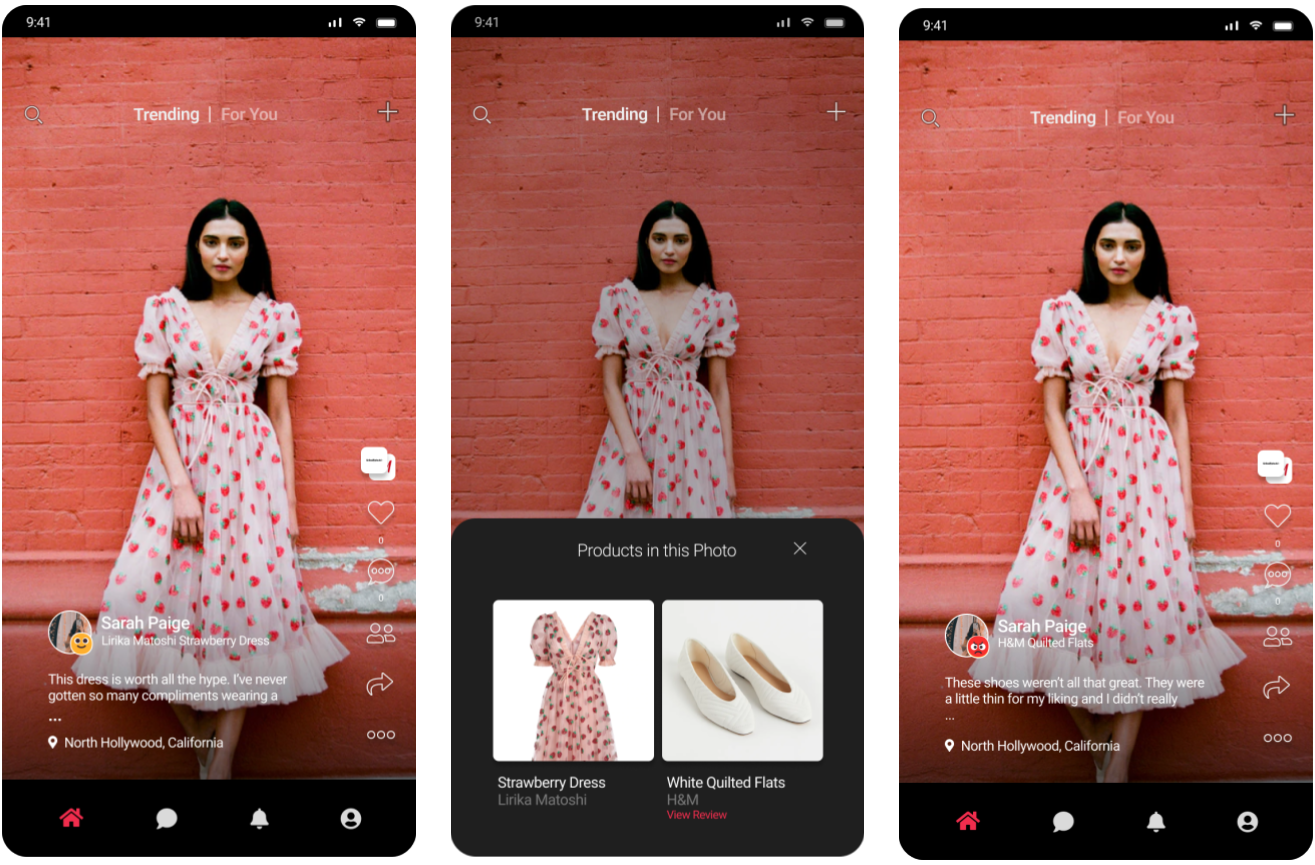
My Brands: the goal of this feature was to list out the products that the user was wearing (or reviewing) and provide links to buy it.
Takeaways
This was my first time working in a professional setting as a UI/UX Designer, so naturally, the experience taught me a lot. Having only done projects in person with classmates, to creating an actual app in a remote environment with coworkers from all around the world showed me the actual process of app development. Since we were just a startup, I was able to interact with every team, and learn a little bit about each step.
I soon realized how fast app development actually was in a professional setting. As soon as a design of mine was approved, frontend developers would immediately start working on it. Because of this, I slowly started to become a more efficient designer. At the beginning of my internship, I was very poor and communicating with my team. I didn’t take the time to properly understand the tasks assigned to me, so at times, I would misunderstand the feature’s purpose and create a prototype for the wrong feature. On top of that, I had a very bad habit of going straight into designing instead of brainstorming ideas. As I continued my internship, I realized that brainstorming rough sketches and discussing potential ideas with my team, would save a lot of time for all of us, as I wouldn’t be spending time creating designs they didn’t like in the first place.
Near the end of my internship, I became more comfortable with my team, and as communication and feedback on designs increased I was able to become a more efficient designer. I was able to develop a process that worked well for me and my team. I was able deliver prototypes at a faster pace, and be ahead of schedule for the tasks I was responsible for. MyBranz helped me develop my own process and style as a UI/UX Designer, but I hope to continue growing my skillset and knowledge further when it comes to design.
Find something cool?
Keep in touch with the links below!
 Ashmita Ravichandran